

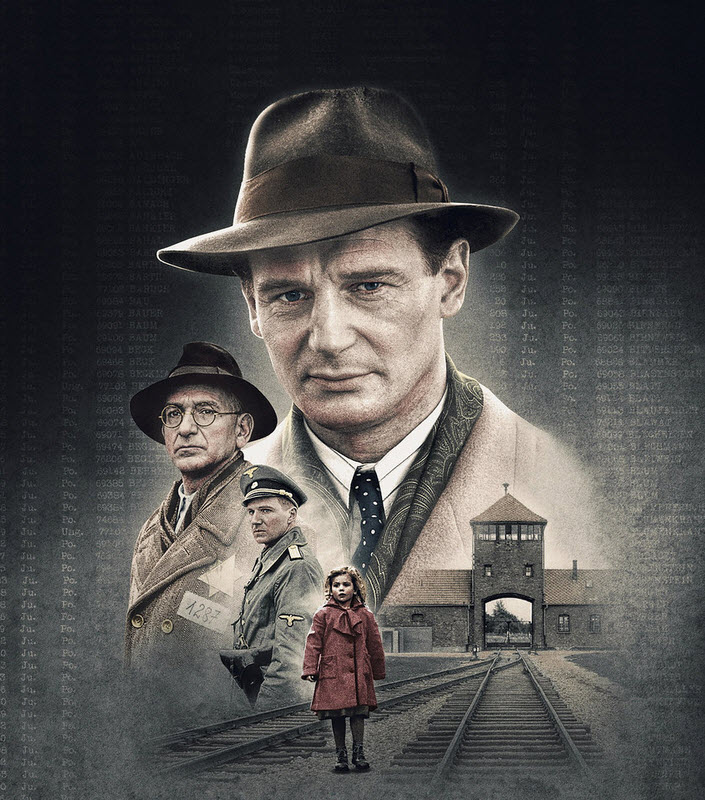
“Schindler’s List” is a critically acclaimed film directed by Steven Spielberg and released in 1993. The film is based on the true story of Oskar Schindler, a German businessman who saved the lives of over a thousand Polish-Jewish refugees during the Holocaust by employing them in his factories and thereby protecting them from deportation and extermination.
The movie stars Liam Neeson as Oskar Schindler, Ralph Fiennes as Amon Göth (a sadistic Nazi officer), and Ben Kingsley as Itzhak Stern (Schindler’s Jewish accountant). “Schindler’s List” is known for its powerful and emotionally charged portrayal of the Holocaust and its impact on both the victims and those who tried to help them.
The film received widespread critical acclaim and won seven Academy Awards, including Best Picture and Best Director. It is often considered one of the greatest films ever made and is an important work in cinematic history for its poignant depiction of a dark chapter in human history. “Schindler’s List” serves as a powerful reminder of the atrocities of the Holocaust and the capacity for compassion and heroism in the face of unimaginable evil.
“Schindler’s List” is a haunting and emotionally charged film that tells the true story of Oskar Schindler, a German businessman who becomes an unlikely hero during the Holocaust. The movie is set in Kraków, Poland, during World War II.
The film opens with the German invasion of Poland in 1939, which marks the beginning of World War II. Oskar Schindler (played by Liam Neeson) arrives in Kraków with ambitions of making a fortune by taking advantage of the war’s economic opportunities. He establishes a enamelware and ammunitions factory and begins hiring Jewish laborers due to their lower wages.
As the war escalates and the Nazi regime intensifies its persecution of Jews, the Jewish population in Kraków is forced into the crowded and dehumanizing Kraków Ghetto. Conditions in the ghetto are horrific, with mass deportations to concentration camps and the constant threat of violence. Schindler, initially motivated by profit, begins to witness the brutality and suffering of the Jewish people under Nazi rule, particularly through his interactions with Itzhak Stern (played by Ben Kingsley), a Jewish accountant who becomes Schindler’s right-hand man.
Moved by the inhumanity he witnesses, Schindler devises a plan to save as many Jews as possible from the concentration camps. He uses his factory as a cover, claiming that the Jewish workers are essential to the war effort. Schindler goes to great lengths, bribing Nazi officials and manipulating the system to keep his workers safe. He even constructs a sub-camp near his factory to protect them from deportation.
Amon Göth (played by Ralph Fiennes) serves as a chilling antagonist in the film. He is a sadistic Nazi officer who oversees the liquidation of the Kraków Ghetto and later becomes the commandant of the Plaszów concentration camp. His cruelty and random acts of violence contrast starkly with Schindler’s efforts to save lives.
As the war nears its end, Schindler’s list of “essential” workers grows, and he spends his fortune bribing and providing for them. He even manages to convince Göth to allow him to move his factory and workers to a safer location in Brünnlitz, Czechoslovakia.
The film concludes with the liberation of the Brünnlitz labor camp by the Allies. Schindler is deeply moved by the realization that he could have done more to save lives. He presents a gold ring to Stern as a symbol of his gratitude. Schindler’s workers express their gratitude and present him with a signed letter acknowledging his heroism. Schindler is deeply moved and regrets that he couldn’t save more lives.
The film ends with a powerful scene in which Schindler, overcome with emotion and guilt, says goodbye to his workers and leaves, realizing that his car represents the lives he could have saved. The workers, now free, watch as Schindler’s car drives away. The film then transitions to the real-life survivors and their descendants placing stones on Schindler’s grave in Jerusalem as a sign of respect and remembrance.
“Schindler’s List” is a poignant and harrowing portrayal of the Holocaust, depicting the atrocities committed by the Nazis and the extraordinary acts of courage and compassion displayed by Oskar Schindler and those who were saved by him.
“Schindler’s List” is a masterpiece of filmmaking that stands as a testament to the power of cinema to convey both the depths of human cruelty and the heights of human compassion. Directed by Steven Spielberg, the film is a gripping and emotionally devastating exploration of one man’s journey from profiteer to savior during the Holocaust.
Here are some key aspects of the film that make it a remarkable and important work:
- Powerful Storytelling: “Schindler’s List” is based on the true story of Oskar Schindler, a flawed but ultimately heroic figure who risked everything to save the lives of over a thousand Jews during one of the darkest periods in history. The film’s narrative is compelling and emotionally resonant, drawing viewers into the horrors of the Holocaust while also highlighting moments of hope and redemption.
- Superb Acting: The performances in the film are exceptional. Liam Neeson delivers a career-defining performance as Oskar Schindler, portraying the character’s transformation from a self-interested businessman to a selfless humanitarian with depth and authenticity. Ralph Fiennes is equally outstanding as Amon Göth, the sadistic Nazi officer. The entire cast, including Ben Kingsley and the supporting actors, contributes to the film’s emotional impact.
- Cinematic Excellence: Steven Spielberg’s direction and Janusz Kamiński’s cinematography work in perfect harmony to create a visually stunning and emotionally charged film. The use of black and white cinematography adds a stark and haunting quality to the imagery, emphasizing the historical authenticity of the setting.
- Historical Accuracy: The film is meticulously researched and strives for historical accuracy in its depiction of the Holocaust. Spielberg and his team consulted survivors and witnesses to ensure that the film captured the grim reality of the events it portrays.
- Emotional Impact: “Schindler’s List” is a profoundly emotional film that elicits a wide range of emotions from the audience, from horror and sadness to hope and admiration. It challenges viewers to confront the darkest aspects of human nature while also celebrating acts of heroism and kindness.
- Important Themes: The film explores important themes such as the moral responsibility of individuals in the face of injustice, the consequences of indifference, and the capacity for redemption. It serves as a powerful reminder of the Holocaust’s horrors and the importance of remembering and learning from history.
- Academic and Cultural Significance: “Schindler’s List” is not just a cinematic achievement but also an important educational and cultural resource. It has been used in classrooms worldwide to teach about the Holocaust and ethical decision-making.
- Historical Documentation: The film not only tells a powerful story but also serves as a form of historical documentation. It captures the details of life during the Holocaust, from the cramped conditions in the Kraków Ghetto to the brutality of concentration camps. This has made it an invaluable resource for researchers, educators, and historians studying the Holocaust.
- Holocaust Education: “Schindler’s List” has played a crucial role in Holocaust education, raising awareness about the Holocaust and its atrocities. Many schools and organizations use the film as an educational tool to teach about the Holocaust, genocide, and human rights. It has helped generations of students to better understand the historical context and moral implications of the Holocaust.
- Impact on Filmmaking: The film’s success and critical acclaim have had a lasting impact on filmmaking. It demonstrated that even in a commercial medium, a film can tackle serious and challenging subject matter with artistic integrity. It has inspired other filmmakers to take on historically significant and socially relevant themes.
- Recognition and Awards: “Schindler’s List” received widespread recognition and numerous awards, including seven Academy Awards. Its critical and commercial success highlighted the fact that films dealing with important historical events and moral dilemmas can resonate with audiences and achieve both artistic and financial success.
- Legacy of Oskar Schindler: The film immortalized Oskar Schindler as a symbol of courage and altruism. His story continues to inspire people around the world to stand up against injustice and to recognize the potential for good in humanity, even in the darkest of times.
- Holocaust Survivor Testimonies: The film’s release prompted many Holocaust survivors to share their stories and experiences. It contributed to a broader public awareness of survivor testimonies, ensuring that their voices are heard and their stories are preserved for future generations.
- Cultural Impact: “Schindler’s List” has left an indelible mark on popular culture. Iconic scenes and lines from the film are frequently referenced, and its impact can be seen in the way the Holocaust is portrayed and remembered in various forms of media and art.
- Continued Relevance: The film remains relevant in contemporary discussions about racism, prejudice, and the importance of standing up against discrimination. It serves as a poignant reminder of the dangers of hatred and the enduring need for compassion and empathy.
In summary, “Schindler’s List” is not just a film; it is a cultural touchstone that continues to educate, inspire, and provoke meaningful conversations about one of the darkest chapters in human history. Its enduring impact is a testament to the enduring power of cinema to provoke thought, evoke emotions, and challenge our understanding of the world.
