

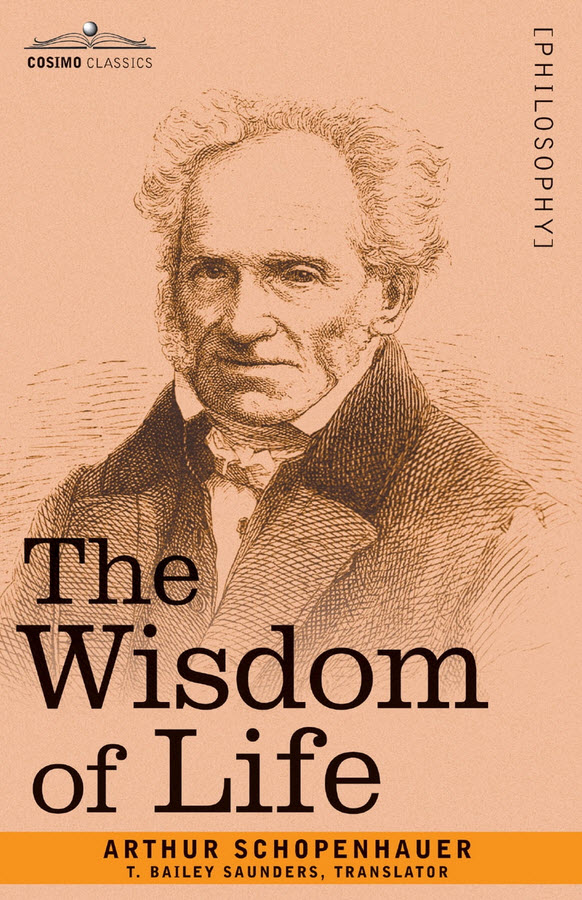
“The Wisdom of Life” is a philosophical essay written by the German philosopher Arthur Schopenhauer. It was originally published in 1851 as part of a collection of essays titled “Parerga and Paralipomena.” This work explores Schopenhauer’s ideas on the pursuit of happiness and the art of living a meaningful life.
In “The Wisdom of Life,” Schopenhauer discusses various aspects of human existence and offers advice on how to achieve a more fulfilled and content life. He argues that true happiness can be found by minimizing desires and attachments, embracing a simple and contemplative lifestyle, and seeking inner contentment rather than relying on external sources for satisfaction.
Schopenhauer’s philosophical ideas in this essay are influenced by his pessimistic worldview, where he believes that human existence is characterized by suffering and dissatisfaction. However, he suggests that by understanding and mastering our desires and adopting a certain way of life, individuals can mitigate the effects of this suffering and attain a sense of wisdom and contentment.
Overall, “The Wisdom of Life” is a significant work in Schopenhauer’s philosophy, offering insights into his views on human nature, happiness, and the pursuit of a meaningful life. It remains an important text in the field of ethics and philosophical thought.
“The Wisdom of Life” by Arthur Schopenhauer is a philosophical essay that delves into the pursuit of happiness and the art of living a meaningful life. Originally published in 1851 as part of the collection “Parerga and Paralipomena,” this work explores Schopenhauer’s thoughts on human existence, desire, and contentment.
Schopenhauer begins by examining the nature of human desires. He asserts that desires are insatiable and that they drive much of human behavior. However, he also believes that constantly seeking to satisfy desires leads to a cycle of never-ending wants and dissatisfaction. He argues that true wisdom involves recognizing the futility of these desires and learning to minimize them.
The philosopher emphasizes that true happiness is not found in the pursuit of external goals or possessions but rather in the inner life of the individual. He advocates for a contemplative and reflective approach to life, suggesting that cultivating one’s intellect, pursuing knowledge, and engaging in aesthetic experiences can lead to a deeper sense of contentment.
Schopenhauer also discusses the role of suffering in human existence. He acknowledges that suffering is an inherent part of life and that it cannot be entirely eliminated. However, he contends that by reducing our desires and attachments, we can mitigate the impact of suffering and achieve a state of tranquility.
One of the central themes of the essay is the concept of “asceticism of the intellect.” Schopenhauer proposes that individuals should strive for a detachment from the world of desires and distractions, focusing instead on the intellectual and contemplative aspects of life. By doing so, he believes that one can attain a higher level of wisdom and fulfillment.
Schopenhauer’s essay is influenced by his pessimistic worldview, which views human existence as inherently marked by suffering and dissatisfaction. Nevertheless, he offers a pragmatic approach to finding meaning and contentment in life. He argues that by embracing a simpler and more introspective way of living, individuals can achieve a deeper understanding of themselves and the world, ultimately leading to a more satisfying and meaningful existence.
“The Wisdom of Life” is a philosophical essay by Arthur Schopenhauer that explores the nature of human desires, the pursuit of happiness, and the art of living a fulfilling life. Schopenhauer’s ideas center around minimizing desires, cultivating intellectual pursuits, and embracing an ascetic way of life to achieve wisdom and contentment in the face of life’s inherent suffering.
“The Wisdom of Life” by Arthur Schopenhauer is a thought-provoking philosophical essay that offers a unique perspective on the pursuit of happiness and the art of living a meaningful life. Schopenhauer’s ideas, while rooted in a somewhat pessimistic view of human existence, provide valuable insights into the nature of desire, suffering, and contentment.
One of the strengths of Schopenhauer’s essay is his emphasis on the insatiable nature of human desires and the perpetual cycle of seeking satisfaction. His argument that true wisdom involves recognizing the limitations of these desires and striving for inner contentment rather than relying on external possessions or achievements is thought-provoking and relevant to contemporary discussions on materialism and consumerism.
Schopenhauer’s concept of the “asceticism of the intellect” is a particularly intriguing idea. He suggests that individuals can find deeper fulfillment by focusing on intellectual pursuits, knowledge, and aesthetic experiences. This notion challenges the conventional notion of happiness rooted in wealth or worldly success, advocating for a more contemplative and meaningful approach to life.
However, it’s important to acknowledge that Schopenhauer’s philosophy is influenced by his pessimistic worldview, which can be quite bleak. His belief that suffering is an inherent aspect of human existence may be seen as overly pessimistic by some readers. Moreover, his advice to minimize desires and attachments to mitigate suffering might be seen as impractical or difficult to implement in the complexities of real life.
In terms of readability, Schopenhauer’s writing style is clear and concise, making his ideas accessible to a broad audience. However, the essay is still a work of philosophy, and some readers may find it dense or abstract at times.
Overall, “The Wisdom of Life” is a valuable philosophical work that encourages readers to reflect on their desires, the nature of happiness, and the pursuit of a more meaningful existence. While Schopenhauer’s philosophy may not resonate with everyone, his insights provide a thought-provoking perspective on these timeless and universal questions about the human condition. Readers interested in philosophy and the pursuit of a meaningful life will find this essay to be a stimulating and intellectually rewarding read.
