

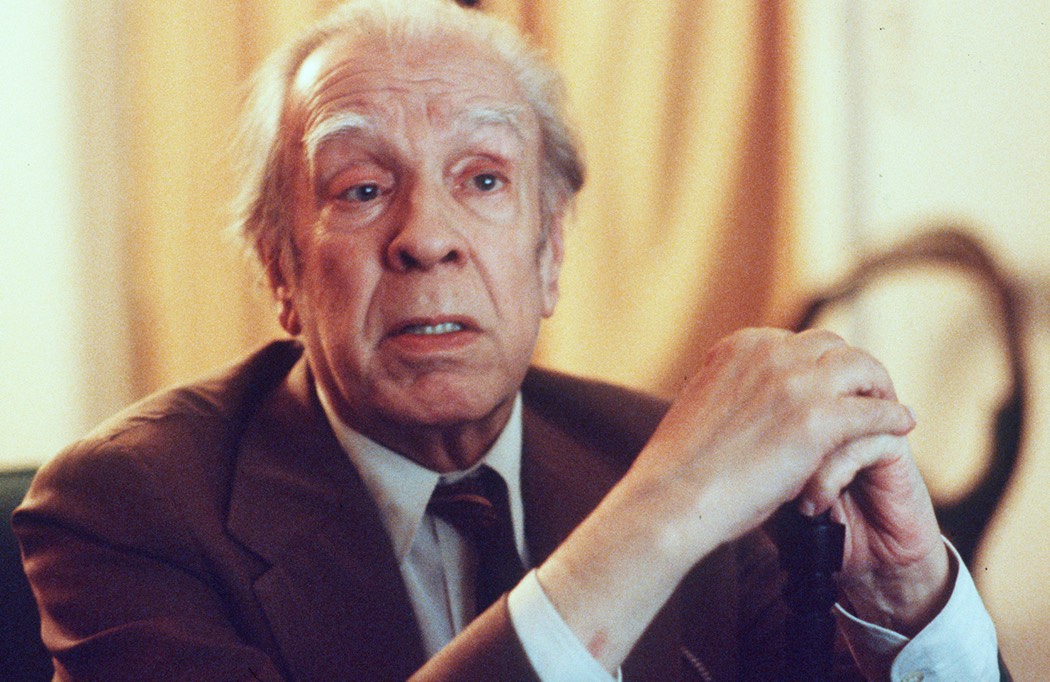
“The Library of Babel” is a short story written by the Argentine author Jorge Luis Borges, first published in 1941. It is one of Borges’ most famous and thought-provoking works. The story addresses themes of infinity, language, knowledge, and the nature of the universe.
Summary:
The story presents a vast, possibly infinite, library that contains all possible books. Each book is of a fixed size, containing 410 pages, and every possible combination of letters, commas, periods, and spaces is represented in some book within the library. This means that the library contains every conceivable book that could be written, including:
- All the true past, present, and future histories of every person.
- All fictional works.
- All true scientific textbooks and all false scientific textbooks.
- Every transformation of every book (e.g., with one letter changed, two letters changed, etc.).
- Complete gibberish or nonsensical books.
The inhabitants of this library universe, referred to as librarians, wander through the hexagonal rooms searching for meaning and the elusive book that explains everything. They are faced with the overwhelming nature of infinity and the challenges of deciphering knowledge from noise.
The story delves into the concept that with infinite possibilities come infinite non-possibilities. That is, for every meaningful book in the library, there are countless books filled with nonsense. This realization drives some librarians to despair, while others hope to find the fabled “Book of Answers” that explains the library’s existence and purpose.
Themes and Interpretation:
“The Library of Babel” grapples with deep philosophical questions about the nature of the universe, the pursuit of knowledge, and the search for meaning in chaos:
- Infinity and Universe: The library can be seen as a metaphor for the universe, with its endless possibilities and the daunting vastness of existence.
- Search for Meaning: Just as humans search for purpose and understanding in life, the librarians seek meaning among the library’s endless books.
- Knowledge and Its Limitations: The library contains all knowledge, but the vast majority of it is indistinguishable from noise. This raises questions about the nature of knowledge and the challenge of discerning truth from falsehood.
- Existential Despair and Hope: The story conveys the human experience of grappling with the vastness of the universe, the inherent challenges in finding meaning, and the balance between hope and despair.
Borges’ story can be interpreted in many ways, and its abstract nature encourages readers to ponder the profound implications of infinity, knowledge, and the search for meaning.
Setting
The story is set in a universe that consists entirely of an enormous library made up of hexagonal rooms. Each room contains four walls of bookshelves, with each shelf holding thirty-five books of uniform format. Every book contains exactly 410 pages, and each page has about 40 lines with approximately 80 black letters.
Description of the Library
The universe-library encompasses all conceivable combinations of the 25 orthographic symbols: 22 letters, the comma, the period, and the space. This means it contains every possible book that could ever be written, given these constraints. The library has:
- Books that make complete sense, such as a true history of humankind.
- Books that are slightly off, for instance, with a typographical error or a historical inaccuracy.
- Completely nonsensical arrangements of symbols.
- Philosophical works of immense profundity and others that are pure gibberish.
- Narrations of all possible futures.
The Librarians
The librarians are the inhabitants of this universe, and they wander through the rooms, hoping to find books of significance. Their lives are spent searching for books that would provide them with clarity or purpose, such as:
- The “Crimson Hexagon” book, which is identical to all other books except for a single sheet that explains the origins and purpose of the universe.
- A book that is the cipher or key to another book.
- The librarians’ own autobiographies.
- The comprehensive catalog of the library itself.
Given the vastness and randomness of the library, finding any specific book is near impossible, which leads many librarians to despair.
Culture and Despair
Throughout the story, the library creates its own lore and belief systems. There are diverse sects and conflicting philosophies among the librarians. Some believe the library is infinite, while others believe there are boundaries.
Many librarians face existential despair due to the overwhelming task of finding a meaningful book. Some even dream of a man who read the book that is the key to all other books, and in reading it, he went mad. There are tales of distant rooms where it’s possible to find coherent and orderly books, but these stories are often regarded with skepticism.
Conclusion
The narrator reflects on the cyclical nature of the library and the universe. He speculates that the library has existed forever and will continue to do so. Given its infinite nature, any book that could be found or written has already been found or written before. He concludes with the idea that the library, with all its vastness and chaos, is perfect, as it contains all human language and knowledge. The challenge lies in finding order and meaning in this vast sea of randomness.
In the end, “The Library of Babel” serves as a metaphor for the quest for knowledge, the vastness of the universe, and the human need to find meaning in chaos.
“The Library of Babel” is one of the most enigmatic and profound short stories by Jorge Luis Borges, an emblematic figure in world literature known for his intricate weaving of philosophy, mathematics, and metafiction into compelling narratives. With this story, Borges presents readers with a universe both alien and eerily familiar, exploring profound concepts that continue to captivate thinkers and readers alike.
The brilliance of Borges lies not just in the originality of his concept but in the meticulous detail with which he paints this universe. The library, with its hexagonal rooms and endless corridors of books, is both a metaphor for the universe and a reflection of the human mind with its insatiable quest for knowledge. As one delves deeper into the narrative, the library’s vastness becomes both a source of wonder and existential dread. Every conceivable book exists within its walls, but the overwhelming majority are pure gibberish. This conundrum mirrors our own universe where meaning seems drowned out by chaos.
What is particularly striking is the emotional resonance of the tale. The librarians, in their unending quest for meaning, represent all of humanity. Their despair, hope, and ceaseless searching echo our own struggles to find purpose in an unfathomable universe. Borges beautifully captures the balance of wonder and nihilism, highlighting the human yearning to find order amidst disorder.
Borges’ prose is, as always, succinct yet rich. He crafts a narrative that is both accessible and dense with layers of meaning. Each rereading offers new insights, making “The Library of Babel” a story that never truly ends for the reader.
However, it’s worth noting that Borges’ work might not appeal to everyone. Readers seeking a linear plot or conventional storytelling may find themselves lost or even frustrated. This is a tale that demands patience, reflection, and a willingness to embrace uncertainty.
In conclusion, “The Library of Babel” is a masterclass in speculative fiction, a thought experiment that delves deep into the human psyche and our relationship with knowledge, meaning, and the cosmos. It’s a testament to Borges’ genius that a story written over eight decades ago continues to inspire, challenge, and bewilder readers to this day. Highly recommended for those who relish intellectual challenges and philosophical ponderings.
At its core, “The Library of Babel” is an exploration of infinity, the limitations of human understanding, and the dichotomy between order and chaos. The enormity of the library Borges envisions — vast, perhaps infinite, yet bounded by its own rules — stands as a poignant metaphor for the universe. Much like modern scientists and philosophers, the librarians grapple with the impossibility of comprehending the full extent of their surroundings.
Borges also delves deep into the psychological and societal implications of such a setting. The library, with its infinite volumes of nonsensical combinations of characters, offers a bleak reflection of information overload. In a way, the story foreshadows our current age, where we’re inundated with vast amounts of data, and discerning meaning becomes increasingly challenging. This theme is remarkably prescient, considering the exponential growth of digital information in the decades following Borges’ time.
The myriad of sects and groups that the librarians form, each with its own beliefs and rituals about the library, mirrors human tendencies to seek solace in shared convictions, especially when faced with the incomprehensible. Their rituals, ranging from the desperate to the bizarre, underscore the lengths to which individuals will go to imbue their lives with meaning.
Borges’ writing style in this story is particularly noteworthy. While dense and laden with deep philosophical undertones, there’s an elegance and precision to his prose. Every sentence is meticulously crafted, inviting the reader to pause and ponder. His decision to use a first-person narrative gives the story an intimate touch, making the sprawling, impersonal vastness of the library more immediate and affecting.
However, the very qualities that make “The Library of Babel” a masterpiece can also make it daunting for some readers. The story’s recursive, abstract nature might seem obtuse, especially for those unfamiliar with Borges’ characteristic style. It’s not a casual read, but rather a story that demands engagement and introspection.
In conclusion, “The Library of Babel” is not just a narrative but an experience, a journey through the labyrinths of infinity and the human psyche. It’s a testament to Borges’ unparalleled prowess as a storyteller that he could craft a universe as intricate as the library in the confines of a short story. While it may not be for everyone, for those who venture into its hexagonal chambers, the rewards are boundless.
