

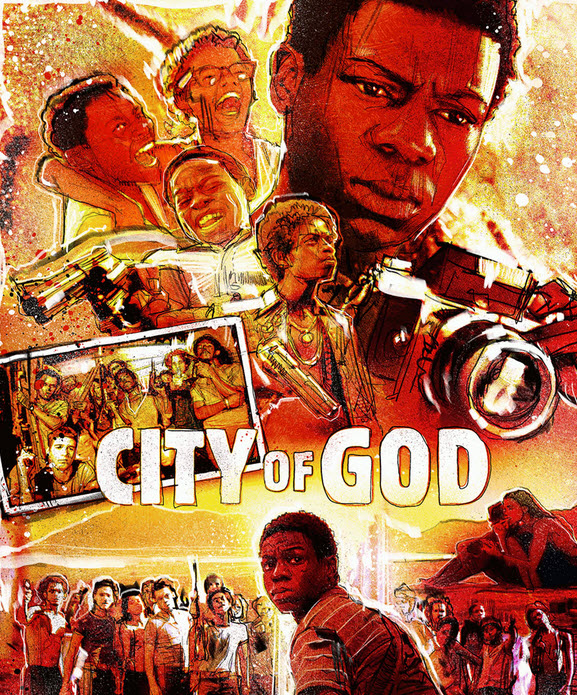
“City of God” is a Brazilian crime drama film directed by Fernando Meirelles and Kátia Lund. The film was released in 2002 and is based on a novel of the same name by Paulo Lins. It is set in the favelas (slums) of Rio de Janeiro and tells the story of two young men, Rocket and Li’l Zé, as they navigate the violent and dangerous world of organized crime in their neighborhood.
The film is known for its gritty and realistic portrayal of life in the favelas and the brutal cycle of poverty, crime, and violence that many residents experience. It explores themes of youth, friendship, ambition, and the impact of systemic issues on individuals and communities.
“City of God” received critical acclaim and was nominated for four Academy Awards, including Best Director for Fernando Meirelles. It also gained international recognition for its compelling storytelling, powerful performances, and striking cinematography. The film’s depiction of the harsh realities of life in the favelas has made it an important work in the world of cinema and a thought-provoking exploration of social issues.
“City of God” is an epic crime drama that unfolds in the poverty-stricken and violence-ridden slums of Rio de Janeiro, Brazil. The film follows the lives of several characters, but primarily focuses on two young men, Rocket (Buscapé) and Li’l Zé (Zé Pequeno), as they navigate the harsh realities of their environment.
The story begins in the 1960s when Rocket is just a young boy living in the City of God, a sprawling and overcrowded favela. He dreams of becoming a photographer and escaping the cycle of poverty and violence that surrounds him. As he grows up, he becomes an outsider who documents the lives of those around him.
Li’l Zé, on the other hand, is a ruthless and ambitious gang leader who rules the City of God with an iron fist. From a young age, he shows a propensity for violence and criminality. His reign of terror and drug dealing, along with his partner-in-crime, Benny, brings chaos and destruction to the community.
As Rocket and Li’l Zé’s lives intersect, the film takes viewers on a journey through the decades, showing the evolution of the drug trade and crime in the City of God. It explores the lives of various characters caught up in this world, including Knockout Ned, Carrot, and Shaggy.
Rocket’s passion for photography provides a unique perspective on the events unfolding around him. He captures the brutality, poverty, and moments of humanity that coexist within the favela. Through his lens, the audience witnesses the rise and fall of powerful drug lords and the devastating consequences of their actions.
The film depicts the grim reality of life in the favelas, where children are forced into a life of crime and violence at an early age, and where loyalty and betrayal are intertwined. Rocket’s struggle to stay out of trouble and pursue his dreams, and Li’l Zé’s relentless pursuit of power, form the central conflict of the story.
Ultimately, “City of God” is a powerful and thought-provoking exploration of the cycle of violence and poverty in the favelas of Rio de Janeiro. It is a gripping and emotionally charged film that exposes the harsh realities faced by its characters and the enduring impact of a society plagued by inequality and corruption.
“City of God” is widely regarded as a cinematic masterpiece and one of the most impactful crime dramas ever made. Here’s a review that highlights some of its key strengths:
- Realism: The film’s greatest strength lies in its gritty and realistic portrayal of life in the favelas of Rio de Janeiro. It doesn’t romanticize or sensationalize the violence and poverty but instead presents an unflinching look at the harsh realities faced by its characters. This authenticity immerses the audience in the world of the City of God, making it a visceral and haunting experience.
- Compelling Characters: The film’s characters are multi-dimensional and deeply complex. Rocket and Li’l Zé, in particular, are fascinating protagonists with contrasting ambitions and moral compasses. The audience becomes emotionally invested in their journeys, which adds depth and poignancy to the narrative.
- Social Commentary: “City of God” serves as a powerful commentary on the societal issues of poverty, inequality, and the perpetuation of violence in marginalized communities. It doesn’t offer easy answers but forces viewers to confront uncomfortable truths about the cycle of crime and its impact on young lives.
- Cinematic Excellence: The film’s direction, cinematography, and editing are top-notch. The use of frenetic camera work and dynamic editing techniques creates a sense of urgency and tension that keeps viewers engaged throughout. The vibrant and visually stunning depiction of the favela contrasts starkly with the dark subject matter.
- Emotional Impact: “City of God” elicits a wide range of emotions, from shock and horror at the violence to empathy and sorrow for the characters’ struggles. It’s a film that lingers in your mind long after the credits roll, prompting introspection about the human condition and societal failures.
- Cultural Insight: The film offers a glimpse into Brazilian culture, particularly the vibrant music and dance scenes that provide moments of respite and celebration amidst the chaos. This cultural richness adds depth and authenticity to the narrative.
- Direction and Co-Director: The film’s direction by Fernando Meirelles and Kátia Lund is masterful. Their collaboration brings a unique blend of storytelling techniques, combining Meirelles’ skill in capturing the frenetic energy of the favela with Lund’s documentary-style authenticity. This co-directing approach adds depth to the film’s narrative.
- Performances: The cast, many of whom were non-professional actors from the favelas, delivers outstanding performances. Alexandre Rodrigues, who plays Rocket, and Leandro Firmino, who portrays Li’l Zé, are particularly impressive in their roles, bringing a sense of authenticity and raw emotion to their characters.
- Pacing and Narrative Structure: “City of God” expertly balances a non-linear narrative structure with a well-paced storyline. The use of flashbacks and multiple perspectives allows the audience to piece together the complex web of relationships and events in the favela, keeping them engaged and invested in the story.
- Impact on Brazilian Cinema: The film had a significant impact on Brazilian cinema, both domestically and internationally. It helped bring attention to Brazilian cinema on the global stage and paved the way for other Brazilian directors and filmmakers to gain recognition.
- Soundtrack: The film’s soundtrack, featuring a mix of Brazilian music genres like samba, bossa nova, and funk, adds a layer of cultural richness and authenticity to the story. The music becomes a character in itself, enhancing the atmosphere and emotions of the film.
- Awards and Recognition: “City of God” received critical acclaim worldwide and was nominated for several prestigious awards, including four Academy Awards. Its success not only solidified its place in cinematic history but also drew attention to the talent of Brazilian filmmakers.
In conclusion, “City of God” is a cinematic tour de force that excels in nearly every aspect of filmmaking, from its direction and performances to its storytelling and cultural relevance. It’s a movie that not only entertains but also challenges viewers to grapple with complex social issues and leaves a lasting impact on their understanding of the world it portrays.
