

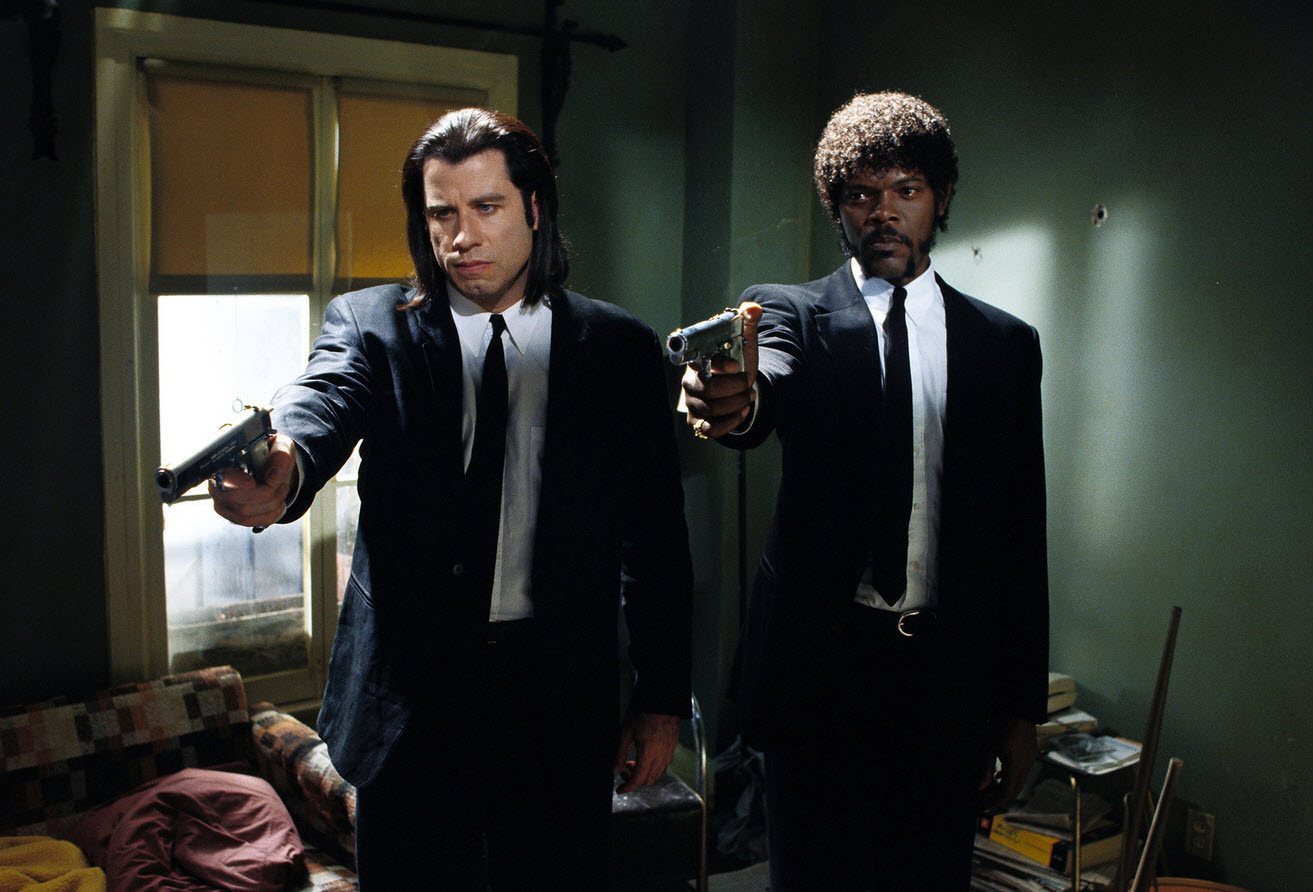
“Pulp Fiction” is a 1994 American crime film written and directed by Quentin Tarantino. The film is known for its non-linear narrative and a unique blend of dark humor, violence, and pop culture references. It has become a cult classic and is often regarded as one of the most influential films of the 1990s.
The film features an ensemble cast that includes:
- John Travolta as Vincent Vega: A hitman working for a gangster named Marsellus Wallace.
- Samuel L. Jackson as Jules Winnfield: Vincent Vega’s partner in crime.
- Uma Thurman as Mia Wallace: Marsellus Wallace’s wife.
- Bruce Willis as Butch Coolidge: A boxer who becomes entangled in the criminal world.
- Ving Rhames as Marsellus Wallace: A powerful and intimidating gangster.
- Harvey Keitel as Winston “The Wolf” Wolfe: A professional “cleaner” who helps characters in difficult situations.
- Tim Roth as Pumpkin / Ringo: One half of a pair of small-time criminals.
- Amanda Plummer as Honey Bunny / Yolanda: The other half of the criminal couple.
- Christopher Walken as Captain Koons: A military veteran with a unique backstory.
The film weaves together multiple interconnected stories, including hitmen, a boxer, a mob boss’s wife, a pair of robbers, and various other characters in the Los Angeles criminal underworld. “Pulp Fiction” is known for its memorable dialogue, iconic scenes, and a soundtrack that features a mix of surf rock, soul, and classic rock music.
“Pulp Fiction” received critical acclaim upon its release and won the Palme d’Or at the 1994 Cannes Film Festival. It also received several Academy Award nominations, including Best Picture, and won the Oscar for Best Original Screenplay (written by Quentin Tarantino and Roger Avary). The film’s impact on popular culture has been significant, and it remains a beloved and enduring classic in the world of cinema.
The film “Pulp Fiction” is divided into several interconnected stories that unfold in a non-linear narrative. It explores the lives of various characters in the Los Angeles criminal underworld and their intersecting paths.
- Prologue: The film opens with a conversation between two hitmen, Jules Winnfield (Samuel L. Jackson) and Vincent Vega (John Travolta), as they drive to a job. Their discussion touches on various subjects, including the mysterious contents of a briefcase.
- Vincent and Mia: Vincent Vega is asked by his boss, Marsellus Wallace (Ving Rhames), to take his wife, Mia (Uma Thurman), out for the evening while Marsellus is away. They visit a 1950s-themed restaurant, where Mia overdoses on heroin. Vincent rushes her to his drug dealer’s house, and they save her life with an adrenaline shot. This incident deepens the bond between Vincent and Mia.
- The Bonnie Situation: After accidentally shooting a man in the backseat of their car, Jules and Vincent seek help from their friend, Winston “The Wolf” Wolfe (Harvey Keitel), to clean up the mess. Wolfe expertly solves the problem, instructing them to dispose of the car.
- Butch’s Story: Butch Coolidge (Bruce Willis), a boxer paid by Marsellus to lose a fight, double-crosses him by winning the match. He flees the city with his girlfriend, Fabienne (Maria de Medeiros). Butch realizes he left his father’s watch behind and decides to return to retrieve it.
- The Gold Watch: Butch returns to his apartment to find Vincent waiting for him. A violent confrontation ensues, resulting in Vincent’s death. Butch retrieves his father’s watch but is spotted by Marsellus, leading to a chase and a violent encounter in a pawn shop. During the altercation, they are both taken captive by two sadistic men.
- The Conclusion: The film’s various storylines converge at this point. Jules decides to leave his life of crime behind after a miraculous event occurs during a confrontation with the two captors in the pawn shop. He and Vincent part ways.
Meanwhile, Butch escapes from the basement of the pawn shop, killing one of the captors, and rescues Marsellus. They reach a truce, and Butch leaves town with Fabienne.
The film ends with Jules quoting a biblical passage and sparing Pumpkin (Tim Roth) and Honey Bunny (Amanda Plummer), the two robbers who had earlier attempted to hold up the restaurant from the prologue.
“Pulp Fiction” is a cinematic masterpiece that has left an indelible mark on the world of film. Quentin Tarantino’s 1994 creation is a tour de force in storytelling, characterized by its unconventional narrative structure, memorable characters, and razor-sharp dialogue.
Here are some key elements that make “Pulp Fiction” a standout film:
- Non-Linear Narrative: The film’s narrative structure, which weaves multiple interconnected stories out of chronological order, was revolutionary at the time. This approach keeps viewers engaged and challenges them to piece together the puzzle of the plot.
- Memorable Characters: The film boasts a cast of unforgettable characters, from the philosophical hitman Jules Winnfield (Samuel L. Jackson) to the suave and conflicted Vincent Vega (John Travolta). Each character is uniquely written and brilliantly portrayed by the ensemble cast.
- Iconic Dialogue: “Pulp Fiction” is renowned for its witty and often darkly humorous dialogue. Tarantino’s sharp writing elevates even mundane conversations to moments of tension and intrigue. Memorable lines from the film have become a part of pop culture.
- Dark Humor and Violence: Tarantino blends humor and violence in a way that’s both shocking and entertaining. The film is unapologetically brutal at times, but it also finds humor in the absurdity of its characters’ situations.
- Exceptional Soundtrack: The film’s soundtrack is a carefully curated collection of songs that complement the action and atmosphere perfectly. It’s a mix of surf rock, soul, and classic rock that adds depth to the film’s unique vibe.
- Themes of Redemption: Beneath its flashy exterior, “Pulp Fiction” explores themes of redemption and morality. Characters grapple with their past choices and seek a way out of the criminal world, often with unexpected results.
- Cultural Impact: “Pulp Fiction” had a profound impact on cinema and popular culture. It revitalized the career of John Travolta, introduced a new generation to Samuel L. Jackson, and solidified Quentin Tarantino’s status as a visionary director.
- Unique Visual Style: Quentin Tarantino’s directorial style in “Pulp Fiction” is visually distinctive. He uses unconventional camera angles, long takes, and creative shots to immerse viewers in the world of the film. The use of close-ups and deliberate pacing enhances the tension in many scenes.
- Subversion of Genre: “Pulp Fiction” defies genre conventions. It blends elements of crime drama, black comedy, and even elements of neo-noir. This genre-bending approach keeps the audience guessing and adds to the film’s unpredictable nature.
- Cultural References: The film is filled with pop culture references, from the use of iconic music to nods to classic films and literature. These references contribute to the film’s rich tapestry and give it a sense of timelessness.
- Exploration of Morality: “Pulp Fiction” raises moral questions and explores the consequences of the characters’ actions. It challenges viewers to consider the moral implications of the choices made by its morally complex characters.
- Strong Performances: The ensemble cast delivers exceptional performances, with standout roles for Samuel L. Jackson, John Travolta, Uma Thurman, and others. These performances breathe life into the eccentric characters and make them feel authentic and memorable.
- Cultural Impact: Beyond the realm of cinema, “Pulp Fiction” has had a lasting impact on fashion, music, and pop culture. The iconic image of Uma Thurman’s Mia Wallace, with her bobbed haircut and white blouse, has become an enduring symbol.
- Influence on Filmmaking: “Pulp Fiction” influenced a generation of filmmakers. Its non-linear storytelling and bold approach to narrative structure inspired countless films that followed, shaping the landscape of contemporary cinema.
- Multiple Viewings: “Pulp Fiction” is a film that often reveals more upon each viewing. Its intricate storytelling and layered characters encourage viewers to revisit it, leading to a deeper appreciation of its nuances and subtleties.
In summary, “Pulp Fiction” is a cinematic triumph that continues to captivate audiences with its unconventional storytelling, memorable characters, and bold visual style. Its cultural impact and influence on filmmaking are undeniable, and it remains a timeless classic that rewards viewers with each subsequent viewing. Quentin Tarantino’s masterful creation continues to be celebrated for its audacious creativity and enduring relevance in the world of cinema.
