

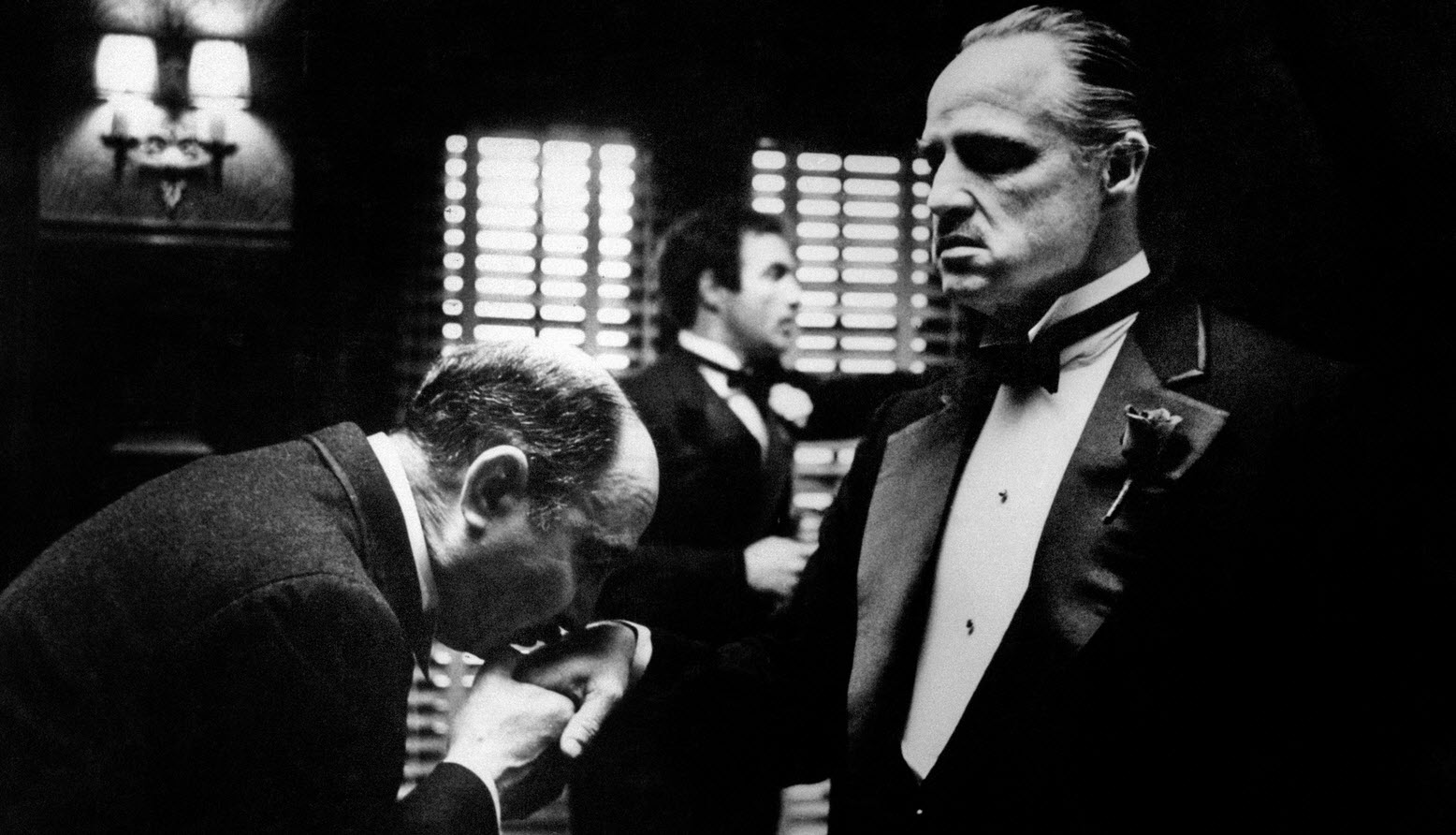
“The Godfather” is a classic American crime film directed by Francis Ford Coppola and released in 1972. It is based on the 1969 novel of the same name by Mario Puzo. The film is widely regarded as one of the greatest movies in the history of cinema and has had a significant cultural impact.
The story revolves around the Corleone crime family, led by patriarch Vito Corleone, portrayed by Marlon Brando. The film explores the complex dynamics of the Italian-American Mafia in post-World War II America. Vito Corleone is a powerful and respected figure who balances family loyalty with the brutal realities of organized crime.
Al Pacino stars as Michael Corleone, Vito’s youngest son, who becomes increasingly involved in the family’s criminal activities as the story unfolds. The film also features James Caan as Sonny Corleone, Robert Duvall as Tom Hagen, and Diane Keaton as Kay Adams.
“The Godfather” is celebrated for its outstanding performances, screenplay, and direction. It received critical acclaim and won three Academy Awards, including Best Picture. It is known for its iconic quotes, memorable scenes, and its influence on subsequent gangster films and popular culture.
The success of “The Godfather” led to two sequels: “The Godfather Part II” (1974), which is also highly regarded and won several Oscars, and “The Godfather Part III” (1990). Together, the trilogy is considered one of the greatest achievements in film history.
“The Godfather” is an epic crime drama that delves into the world of the Italian-American Mafia in post-World War II America. The film primarily follows the Corleone family, a powerful and respected criminal organization led by the patriarch, Vito Corleone (Marlon Brando).
The story begins with a grand wedding celebration for Vito’s daughter, Connie Corleone (Talia Shire). During the festivities, we are introduced to the various members of the Corleone family, including Vito’s sons: Sonny (James Caan), Fredo (John Cazale), and the youngest, Michael (Al Pacino). Michael, a war hero, has been distant from the family’s criminal activities but soon becomes embroiled in their world.
Trouble arises when Vito refuses to get involved in the drug trade, a decision that leads to tensions with other crime families. The film also introduces Tom Hagen (Robert Duvall), the Corleone family’s consigliere, who acts as Vito’s right-hand man. Tom is tasked with dealing with the family’s legitimate business dealings and ensuring their criminal enterprises run smoothly.
The plot takes a dramatic turn when an assassination attempt on Vito Corleone leaves him severely injured. With Vito incapacitated, Sonny takes on a leadership role, but his impulsive nature and hot temper lead to further violence and power struggles. Meanwhile, Michael, who initially wanted nothing to do with the family’s criminal activities, begins to assert himself and takes steps to protect his father and the family.
As the Corleone family faces external threats and internal strife, Michael makes a pivotal decision to eliminate their enemies and secure the family’s future. He orchestrates a series of assassinations, including those of Moe Greene (Alex Rocco) and Virgil “The Turk” Sollozzo (Al Lettieri), a drug lord seeking the Corleones’ involvement in the narcotics trade.
Michael’s transformation into a ruthless and calculating figure culminates in him taking over as the new Don of the Corleone family, solidifying his control over their criminal empire.
“The Godfather” is a story of power, family, loyalty, betrayal, and the moral complexities of the criminal underworld. It explores themes of tradition, honor, and the sacrifices individuals make for the sake of their family and their legacy. The film’s iconic moments, brilliant performances, and masterful storytelling have made it a timeless classic in the history of cinema.
“The Godfather” is not just a film; it’s a cinematic masterpiece that has left an indelible mark on the world of cinema. Released in 1972 and directed by Francis Ford Coppola, it remains a timeless classic that continues to captivate audiences and filmmakers alike. Here’s a review of this iconic movie:
- Outstanding Performances: “The Godfather” boasts an ensemble cast that delivers some of the most memorable performances in film history. Marlon Brando’s portrayal of Vito Corleone earned him an Oscar, and Al Pacino’s transformation from a reluctant outsider to a ruthless leader as Michael Corleone is nothing short of brilliant. The entire cast, including James Caan, Robert Duvall, and Diane Keaton, is exceptional.
- Compelling Storytelling: Based on Mario Puzo’s novel, the screenplay, co-written by Puzo and Coppola, is a masterclass in storytelling. The film weaves a complex narrative filled with themes of power, family, loyalty, and betrayal. It expertly balances intimate family drama with the larger-than-life world of organized crime.
- Atmospheric Cinematography: The cinematography by Gordon Willis is moody and atmospheric, perfectly capturing the dark and morally complex world of the Mafia. The film’s visual style, with its use of shadow and light, has influenced countless filmmakers.
- Iconic Scenes and Dialogue: “The Godfather” is filled with iconic moments and unforgettable lines. From the opening wedding sequence to the horse’s head in the bed and the famous “I’m gonna make him an offer he can’t refuse” line, the film is a treasure trove of cinematic history.
- Cultural Impact: Few films have had the cultural impact that “The Godfather” has had. It not only revitalized the gangster genre but also left an indelible mark on popular culture, with references to the film still prevalent in various forms of media.
- Sequels and Legacy: The success of “The Godfather” led to two equally acclaimed sequels, “The Godfather Part II” and “The Godfather Part III.” Together, they form one of the most celebrated film trilogies in history. The legacy of these films endures through their influence on subsequent generations of filmmakers.
- Soundtrack and Score: The film’s score, composed by Nino Rota, is hauntingly beautiful and adds to the film’s overall atmosphere. The score, including the iconic “The Godfather Waltz,” has become synonymous with the film and is instantly recognizable.
- Exploration of Morality: “The Godfather” is not just a crime film; it’s a profound exploration of morality and the blurred lines between good and evil. The characters are complex, and their actions are often morally ambiguous, challenging the audience to grapple with their own sense of right and wrong.
- Immortalizing Italian-American Culture: The film provides a rich and nuanced portrayal of Italian-American culture, both in its familial bonds and in its criminal underworld. While it has faced some criticism for potentially reinforcing stereotypes, it has also been praised for its depiction of a multifaceted Italian-American experience.
- Awards and Recognition: Beyond its three Academy Awards, “The Godfather” received numerous other accolades and nominations, including Golden Globes, BAFTAs, and various film critics’ awards. It remains a benchmark against which many other films are measured.
- Influence on Filmmaking: “The Godfather” had a profound influence on the filmmaking industry. It contributed to the rise of the auteur director in Hollywood, with Francis Ford Coppola becoming a household name. The film’s success also solidified the importance of the screenplay in filmmaking.
- Quotable Dialogue: The film’s script is filled with memorable and often-quoted lines. It has become a source of inspiration for writers and a benchmark for great dialogue in cinema.
- Preservation and Restoration: “The Godfather” has been preserved and restored over the years to ensure that future generations can experience it in all its glory. The restoration efforts have kept the film’s visual and audio quality at a high standard.
- Enduring Popularity: Despite being released nearly five decades ago, “The Godfather” remains a popular choice for movie buffs and casual viewers alike. Its appeal has transcended generations, making it a film that continues to find new audiences.
In conclusion, “The Godfather” is a cinematic masterpiece that continues to be celebrated for its storytelling, performances, and cultural impact. It’s a film that has left an indelible mark on the history of cinema and will likely continue to do so for generations to come.
