

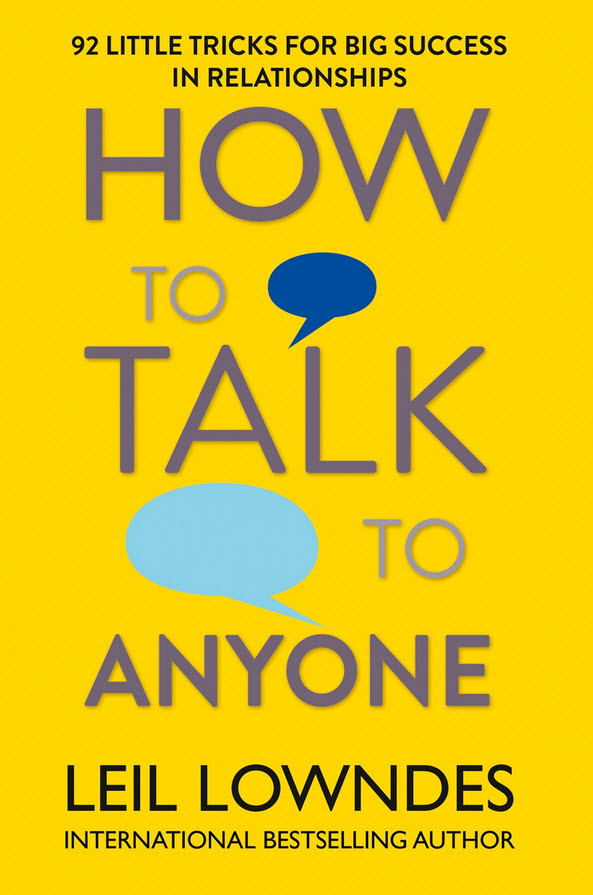
“How to Talk to Anyone” is a self-help book written by Leil Lowndes, aimed at helping readers improve their communication skills and become more confident and effective in social situations. The book provides practical tips and techniques for engaging in conversations, making a positive impression, and building rapport with others. Here’s an overview of some of the key concepts and advice from the book:
- The Power of Body Language: Lowndes emphasizes the importance of non-verbal communication. Your body language, such as your posture, gestures, and facial expressions, can convey a lot of information. The book offers tips on how to use body language effectively to make a positive impression.
- The Art of Listening: Effective communication involves not just talking but also listening actively. Lowndes discusses techniques for being a good listener, such as maintaining eye contact, nodding, and asking open-ended questions to encourage the other person to talk.
- Conversation Starters: The book provides various conversation starters to help you initiate discussions with people you meet, whether in social or professional settings. These include compliments, observations, and openers that can spark interesting conversations.
- Building Rapport: Lowndes explores the idea of building rapport with others by finding common ground and showing genuine interest in their thoughts and feelings. Techniques like mirroring and matching can help establish rapport more easily.
- Confidence and Charisma: Confidence is a key aspect of effective communication. The book offers advice on how to boost your confidence in social situations and develop charisma that draws people towards you.
- Handling Awkward Situations: Lowndes provides strategies for gracefully handling awkward or difficult conversations and turning them into more positive interactions.
- Networking and Social Skills: The book also covers essential skills for networking and making connections in both personal and professional settings.
- Cultural Awareness: Lowndes discusses the importance of cultural sensitivity in communication and offers guidance on how to navigate conversations with people from different backgrounds.
- Practice and Implementation: Throughout the book, there are practical exercises and tips for applying the concepts discussed, so you can improve your communication skills over time.
Review
- Practical and Actionable Tips: Many readers find the book to be a valuable resource for improving their communication skills. They appreciate the practical tips and techniques provided by Lowndes, which can be applied in real-life social situations.
- Easy to Understand: Lowndes’ writing style is often praised for being accessible and easy to understand. She uses clear language and provides numerous examples to illustrate her points, making the content relatable for readers.
- Useful for Various Situations: Readers find that the book’s advice is applicable to a wide range of social and professional situations. Whether you’re looking to improve your networking skills, make a positive impression in interviews, or enhance your social interactions, the book offers guidance.
- Emphasis on Non-Verbal Communication: One of the standout features of the book is its focus on non-verbal communication. Readers appreciate the insights into body language, gestures, and other non-verbal cues, which play a significant role in effective communication.
- Cultural Sensitivity: The book’s attention to cultural sensitivity is another aspect that receives positive feedback. In a globalized world, understanding and respecting cultural differences in communication is essential, and readers find the book’s guidance in this area valuable.
- Building Confidence: Lowndes addresses the issue of confidence, which is often a barrier to effective communication for many people. Her tips on boosting confidence and charisma are seen as beneficial.
- Practical Exercises: The inclusion of practical exercises and real-life examples in the book is appreciated by readers. These exercises allow readers to apply the concepts learned and gradually improve their communication skills.
- Critique: Some readers may find that the book’s advice is not universally applicable and that certain techniques may work better in specific situations or with particular individuals. It’s important to adapt the strategies to suit your own personality and the context in which you’re communicating.
- Real-Life Examples: The book is filled with real-life examples and anecdotes that make the concepts come alive. Readers appreciate the relatable stories that illustrate the principles of effective communication.
- Versatility: “How to Talk to Anyone” is versatile in its application. Whether you’re an introvert looking to become more outgoing or an extrovert seeking to refine your social skills, the book offers something for everyone.
- Positive Feedback on Results: Many readers report positive results after applying the techniques and strategies outlined in the book. Improved social interactions, better networking outcomes, and increased confidence are some of the benefits readers have experienced.
- Readable Format: The book is structured in a way that’s easy to navigate, with clear headings and subheadings. This makes it easy for readers to find specific advice and revisit key concepts.
- Relevance in the Digital Age: While the book was written before the widespread use of social media, the principles of communication it covers remain relevant in today’s digital age. Effective communication skills are valuable both in face-to-face interactions and online.
- Interactive Elements: Some editions of the book include quizzes and self-assessment tools that allow readers to gauge their communication strengths and weaknesses. This adds an interactive element to the learning experience.
- Encourages Continuous Improvement: “How to Talk to Anyone” promotes the idea that communication is a skill that can be honed over time. Readers are encouraged to practice and refine their skills continually, which aligns with the belief that anyone can become a better communicator with effort and persistence.
- Positive Tone: The book maintains a positive and encouraging tone throughout, which motivates readers to take action and work on their communication skills without feeling overwhelmed or judged.
- Critique: Some readers may find that the book’s advice leans heavily towards self-presentation and may not fully address deeper aspects of communication, such as empathy and active listening. It’s important to use the book’s strategies in conjunction with a holistic approach to effective communication.
Overall, “How to Talk to Anyone” by Leil Lowndes is a well-received resource for individuals looking to enhance their communication skills, build confidence, and improve their social interactions. While it may not be the ultimate guide to communication, it offers a practical and accessible starting point for those seeking self-improvement in this important aspect of life.
