

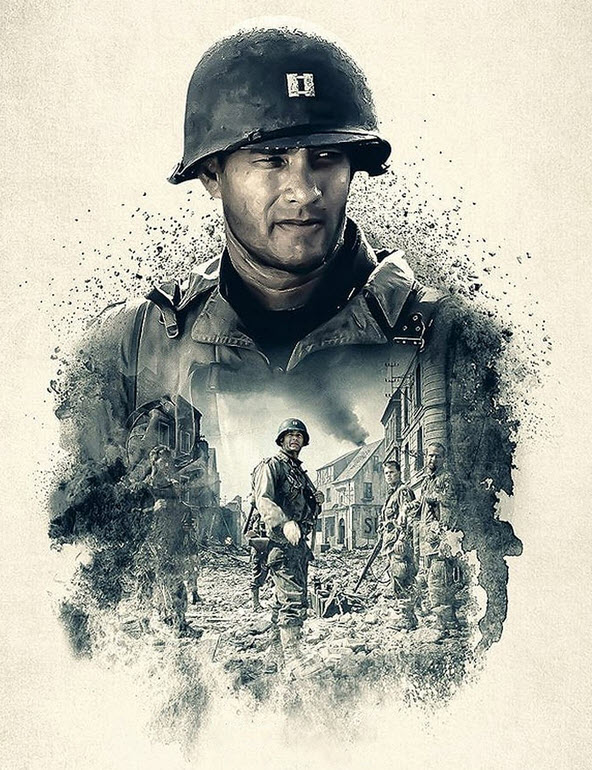
“Saving Private Ryan” is a war film directed by Steven Spielberg and released in 1998. The film is set during World War II and is known for its intense and realistic portrayal of combat during the D-Day invasion of Normandy in 1944. The movie stars Tom Hanks as Captain John H. Miller, who leads a group of soldiers on a mission to locate and bring home Private James Francis Ryan, played by Matt Damon. Private Ryan’s three brothers have been killed in action, and the U.S. Army wants to spare his mother the grief of losing all her sons.
The film is particularly renowned for its opening 27-minute sequence, which depicts the harrowing and chaotic landing of American troops on Omaha Beach on June 6, 1944. The scene is known for its graphic depiction of the brutality of war and has been praised for its realism.
“Saving Private Ryan” received critical acclaim and was a commercial success. It won several Academy Awards, including Best Director for Steven Spielberg. The film is often regarded as one of the greatest war films ever made and is noted for its historical accuracy, powerful performances, and its exploration of themes such as sacrifice, heroism, and the human cost of war.
The film opens with an elderly James Francis Ryan visiting the Normandy American Cemetery and Memorial in Normandy, France, with his family. He stands at the grave of Captain John H. Miller and reflects on the events of his past.
The story then shifts back to June 6, 1944, when Allied forces are preparing for the D-Day invasion of Normandy during World War II. The film’s intense and realistic opening sequence depicts the landing of American soldiers on Omaha Beach. The soldiers face heavy enemy fire and suffer heavy casualties as they struggle to establish a beachhead.
Amidst the chaos, Captain John H. Miller and his men, including Sergeant Horvath (played by Tom Sizemore) and Private Reiben (played by Edward Burns), successfully breach the German defenses. After securing the beach, they receive a new mission: to locate and bring home Private James Francis Ryan, whose three brothers have all been killed in action. The orders come from General George Marshall, who is concerned about the emotional toll on the Ryan family and the need to save the last surviving son.
Miller’s squad, which also includes soldiers like Private Upham (played by Jeremy Davies), Corporal Upham (played by Giovanni Ribisi), Medic Wade (played by Giovanni Ribisi), and others, embarks on a perilous journey behind enemy lines to find Private Ryan. Along the way, they encounter numerous challenges and engage in intense combat with German forces.
As the squad faces danger and loss, they question the morality and purpose of their mission. Private Ryan is eventually located in the town of Ramelle, but he refuses to leave his fellow soldiers, who are preparing to defend the town against a German counterattack.
A climactic battle takes place in Ramelle, where Miller’s squad, alongside Ryan and other American paratroopers, defend the town against overwhelming German forces. Captain Miller is mortally wounded during the battle but manages to tell Private Ryan to “earn this” with his dying breath.
The film returns to the elderly Ryan at the cemetery, where he asks his wife if he has been a good man and lived a life worthy of the sacrifices made by Captain Miller and his men. He salutes Miller’s grave in a display of gratitude and respect.
“Saving Private Ryan” is a powerful exploration of the human cost of war, sacrifice, and the bonds that are formed among soldiers in the midst of unimaginable circumstances. It remains a moving and iconic portrayal of World War II and its impact on those who fought in it.
“Saving Private Ryan” is often hailed as one of the greatest war films ever made, and for good reason. It is a masterful piece of cinema that delivers an intense, visceral, and emotionally charged portrayal of war. Here’s a review of the film:
- Realistic and Gritty: The film’s depiction of combat, especially the harrowing opening sequence at Omaha Beach, is incredibly realistic and gritty. Director Steven Spielberg and cinematographer Janusz Kamiński create an immersive experience that makes you feel like you’re right there on the battlefield. The use of handheld cameras, practical effects, and a lack of glorification of war make the violence and chaos palpable.
- Stellar Cast: Tom Hanks delivers an exceptional performance as Captain John H. Miller, bringing depth and humanity to his character. The ensemble cast, including Matt Damon, Tom Sizemore, Edward Burns, and others, also shines, creating a diverse group of soldiers that you genuinely care about.
- Emotional Depth: Beyond the intense action, “Saving Private Ryan” delves into the emotional toll of war. It explores themes of sacrifice, camaraderie, and the moral complexities of combat. The film poses thought-provoking questions about the value of a single life versus the greater good of the mission.
- Spielberg’s Direction: Spielberg’s direction is masterful, combining technical excellence with a keen sense of storytelling. He balances the brutal realism of war with moments of quiet introspection, resulting in a film that’s both visceral and emotionally resonant.
- Memorable Score: The film’s score, composed by John Williams, is haunting and beautifully complements the visuals. The music enhances the emotional impact of key scenes, making them even more powerful.
- Historical Accuracy: “Saving Private Ryan” is lauded for its historical accuracy, from the uniforms and weaponry to the portrayal of the D-Day invasion. This attention to detail adds to the film’s authenticity.
- Impact: The film’s themes and depiction of war have left a lasting impact on audiences and influenced subsequent war films. It’s a movie that lingers in your mind and prompts reflection on the sacrifices made by soldiers in times of conflict.
- Opening Sequence: The film’s opening 27-minute sequence, depicting the D-Day landing at Omaha Beach, is often cited as one of the most intense and unforgettable sequences in cinematic history. It immerses viewers in the chaos and horror of war, leaving a lasting impression.
- Cinematic Mastery: Steven Spielberg’s direction in “Saving Private Ryan” showcases his exceptional filmmaking skills. He manages to balance the grand scale of war with intimate character moments, creating a cinematic experience that is both epic and deeply personal.
- Themes of Humanity: While it is a war film, “Saving Private Ryan” ultimately explores the humanity of its characters. It reminds us that soldiers are not just faceless warriors but individuals with families, fears, and dreams. The film humanizes both the American and German soldiers, highlighting the commonality of the human experience in the midst of war.
- Character Development: The film skillfully develops its characters, allowing the audience to become emotionally invested in their journeys. Each member of Captain Miller’s squad has their own distinct personality and backstory, making their fates all the more impactful.
- Moral Dilemma: The central premise of the film, the mission to save Private Ryan, raises moral questions about the value of one life versus the lives of many. It challenges the audience to consider the ethical complexities of wartime decisions.
- Cinematography and Sound: The cinematography by Janusz Kamiński and the sound design in “Saving Private Ryan” are exceptional. The use of desaturated colors and handheld cameras adds to the film’s realism, while the sound design immerses viewers in the chaos of battle.
- Enduring Legacy: “Saving Private Ryan” has left a lasting legacy not only in the world of cinema but also in popular culture. It has inspired countless other war films and even video games, and its impact on the way war is portrayed in media is significant.
- Awards and Recognition: The film received critical acclaim and was a major awards contender. It won five Academy Awards, including Best Director for Spielberg, and was nominated for six more, including Best Picture.
- Historical Significance: “Saving Private Ryan” was released on the 50th anniversary of the D-Day invasion, making it a fitting tribute to the soldiers who fought in that pivotal event of World War II.
In summary, “Saving Private Ryan” is a cinematic masterpiece that stands the test of time due to its realistic depiction of war, powerful performances, thought-provoking themes, and the artistic vision of Steven Spielberg. It’s a film that continues to be celebrated and remembered as a landmark in the history of filmmaking.
