

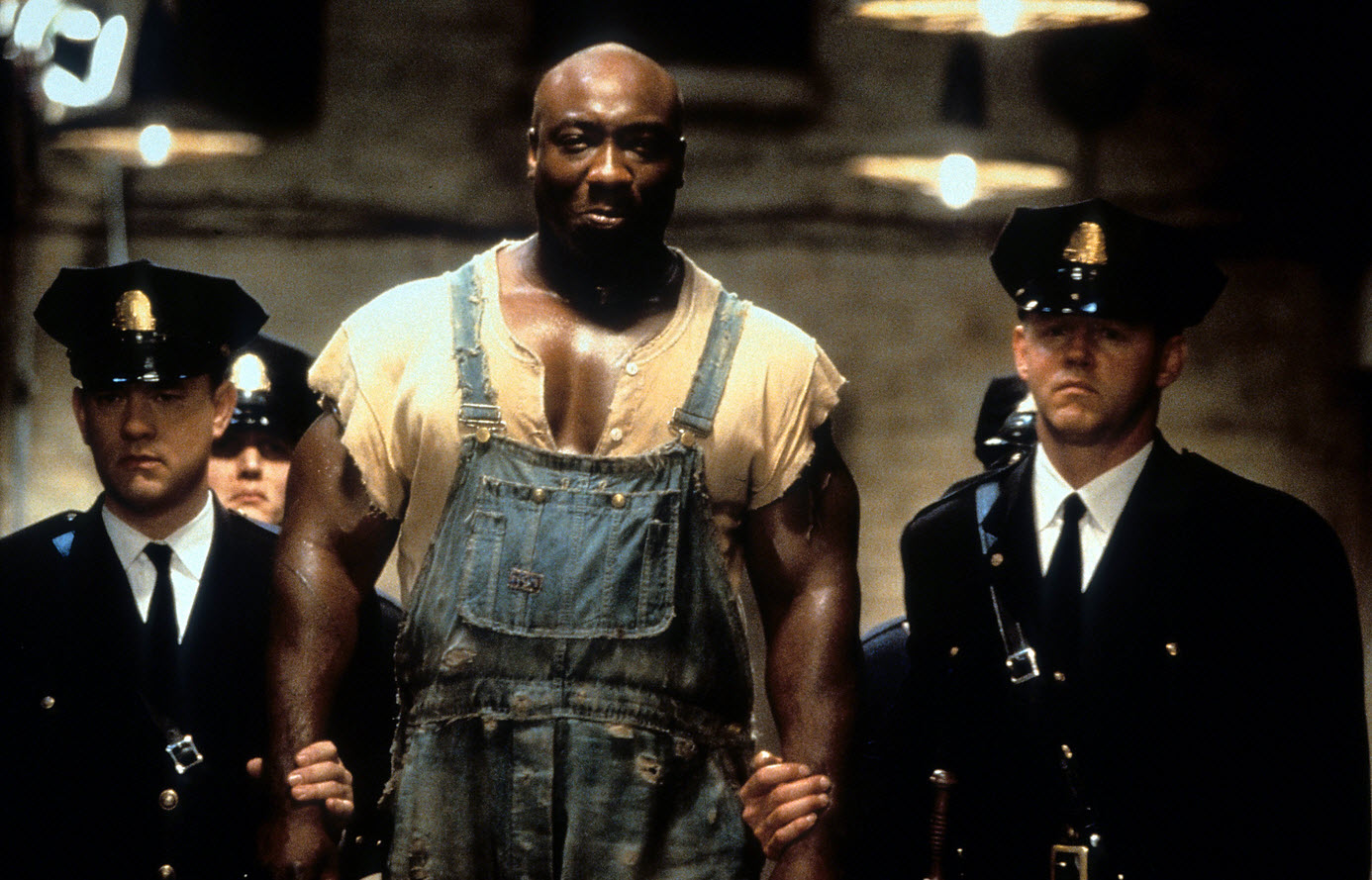
“The Green Mile” is a 1999 American fantasy crime drama film directed by Frank Darabont and based on Stephen King’s 1996 novel of the same name. The film stars Tom Hanks as the lead character, Paul Edgecomb, and features an ensemble cast including Michael Clarke Duncan, David Morse, Bonnie Hunt, James Cromwell, and others.
The story is set in 1935 and revolves around the lives of the guards working in the death row section of a Louisiana prison, known as the “Green Mile” due to the color of the floor. The film explores themes of injustice, empathy, and the supernatural. The main plot follows the arrival of John Coffey (played by Michael Clarke Duncan), a massive and enigmatic African-American prisoner who has been convicted of murder and possesses extraordinary healing powers.
As Paul Edgecomb and his fellow guards get to know John Coffey, they begin to question his guilt and the morality of the death penalty. The film delves into the complexities of the justice system and the impact of prejudice and racism.
“The Green Mile” received critical acclaim upon its release and was nominated for several Academy Awards, including Best Picture. Michael Clarke Duncan’s performance as John Coffey earned him an Academy Award nomination for Best Supporting Actor. The film is known for its emotional storytelling and powerful performances, making it a memorable entry in the prison drama genre.
“The Green Mile” is set in 1935 at the Cold Mountain Penitentiary in Louisiana and is narrated by Paul Edgecomb (Tom Hanks), an elderly resident of a nursing home who reflects on his time as the head guard on Death Row, known as the “Green Mile” because of the green linoleum floor leading to the electric chair.
The film begins with Paul Edgecomb recalling the arrival of a new inmate, John Coffey (Michael Clarke Duncan), a massive African-American man convicted of the brutal rape and murder of two young girls. Despite his intimidating appearance, John Coffey is gentle and childlike in demeanor. He possesses a remarkable gift: the ability to heal illness and injury through touch.
Paul and his fellow guards, including Brutus “Brutal” Howell (David Morse), Dean Stanton (Barry Pepper), and Harry Terwilliger (Jeffrey DeMunn), soon become convinced of John’s innocence due to his sincere and empathetic nature. They also witness him miraculously healing their supervisor’s urinary tract infection and curing a mouse named Mr. Jingles from being lethally poisoned.
As the guards grow closer to John, they learn more about his background. John claims that he was given his healing powers by God and that he is tired of the cruelty and injustice in the world. Meanwhile, the prison’s sadistic warden, Percy Wetmore (Doug Hutchison), frequently abuses his power and takes sadistic pleasure in causing suffering to the inmates.
The emotional heart of the film lies in the unfolding relationship between John Coffey and Paul Edgecomb, as well as the moral dilemma faced by the guards. Despite their efforts, they are unable to prevent John from being executed in the electric chair, as he refuses to prolong his life any further.
On the night of John Coffey’s execution, the guards secretly switch out the sponge used in the electric chair to make the execution as painless as possible for him. John willingly accepts his fate and is executed, but not before transferring some of his unique abilities to Paul Edgecomb, curing him of a urinary infection and granting him a longer life.
In the end, it is revealed that Paul Edgecomb is still alive in the present day, many decades after the events at the prison, due to John’s healing touch. He reflects on the impact John Coffey had on his life and the moral questions raised by the injustice and cruelty he witnessed during his time on the Green Mile.
“The Green Mile” is a poignant and thought-provoking film that explores themes of empathy, injustice, and the supernatural. It is a powerful and emotionally charged story that lingers in the hearts and minds of its viewers.
“The Green Mile” is a remarkable film that leaves a lasting impression due to its powerful storytelling, exceptional performances, and thought-provoking themes. Here’s a review of the movie:
- Outstanding Performances: The film features outstanding performances, with Tom Hanks delivering a heartfelt portrayal of Paul Edgecomb, the head guard with a strong sense of justice and empathy. Michael Clarke Duncan’s performance as John Coffey is nothing short of extraordinary, conveying both the character’s physical presence and his gentle, otherworldly nature. The supporting cast, including David Morse, Barry Pepper, and Doug Hutchison, also excel in their roles.
- Emotional Depth: “The Green Mile” is emotionally charged from start to finish. It skillfully explores profound themes such as the morality of the death penalty, the corrupting influence of power, and the redemptive power of compassion. The film does an excellent job of engaging the audience’s emotions and making them reflect on the complex issues it raises.
- Supernatural Elements: The incorporation of supernatural elements, particularly John Coffey’s healing abilities, adds a unique and mystical layer to the story. It’s not just a prison drama but also a tale of faith, miracles, and the unexplainable.
- Visual and Cinematic Quality: Director Frank Darabont creates a visually stunning film with a meticulous attention to detail. The setting, costumes, and cinematography capture the 1930s atmosphere effectively. The film’s pacing is deliberate, allowing viewers to immerse themselves in the characters’ lives and dilemmas.
- Moral Complexity: “The Green Mile” doesn’t shy away from addressing moral complexities. It challenges viewers to question their own beliefs about justice, compassion, and the consequences of actions. The film doesn’t provide easy answers but invites contemplation.
- Enduring Impact: Even after the credits roll, “The Green Mile” lingers in the mind. Its themes and characters stay with you, sparking discussions and prompting reflection on the human condition and the choices we make.
- Adaptation from Stephen King’s Novel: The film successfully adapts Stephen King’s novel, capturing its essence while translating it to the medium of film. It respects the source material while making necessary adjustments for the cinematic experience.
- Social Commentary: Beyond its supernatural elements and prison setting, the film serves as a commentary on the racial tensions of the 1930s South. John Coffey’s unjust conviction and the racism he faces in the prison highlight the systemic discrimination prevalent during that era. The film doesn’t explicitly focus on this aspect, but it subtly underscores the issues of racial injustice.
- Redemption and Forgiveness: Redemption is a recurring theme in “The Green Mile.” Several characters, including Paul Edgecomb, seek redemption for past mistakes or shortcomings. The film explores the concept of forgiveness and the potential for personal growth and transformation, even in the face of dire circumstances.
- Character Development: The film excels in character development. Each character undergoes a significant transformation throughout the story. Paul Edgecomb’s change from a cynical prison guard to a compassionate and reflective elderly man is particularly moving. These character arcs contribute to the film’s emotional depth and resonance.
- Cinematic Excellence: “The Green Mile” showcases exceptional cinematography and visual storytelling. The use of lighting, camera angles, and set design contributes to the film’s atmosphere and emotional impact. The decision to shoot the film in a traditional 1.33:1 aspect ratio adds a sense of timelessness.
- Soundtrack: The film’s musical score, composed by Thomas Newman, complements the storytelling beautifully. It enhances the emotional depth of the film and adds to the overall experience.
- Universal Themes: While the film is set in the 1930s, its themes are universal and timeless. It addresses issues such as empathy, compassion, the abuse of power, and the search for meaning in a way that resonates with audiences of all backgrounds and time periods.
- Memorable Quotes: “The Green Mile” is known for its memorable and thought-provoking quotes. Lines like “Heaven is under our feet as well as over our heads” and “We each owe a death, there are no exceptions. But, oh God, sometimes the Green Mile seems so long” stay with viewers long after the movie ends.
- Legacy: The film has left a lasting legacy in popular culture. It continues to be discussed, analyzed, and appreciated by audiences and film enthusiasts, cementing its status as a classic in the prison drama genre.
In summary, “The Green Mile” is a cinematic gem that offers much more than a conventional prison drama. It combines exceptional performances, thought-provoking themes, and masterful storytelling to create a film that resonates emotionally and intellectually. Its impact endures over the years, making it a must-watch for anyone who appreciates powerful and thought-provoking cinema.
