10 Fascinating Facts About Sapiens: A Brief History of Humankind

Introduction:
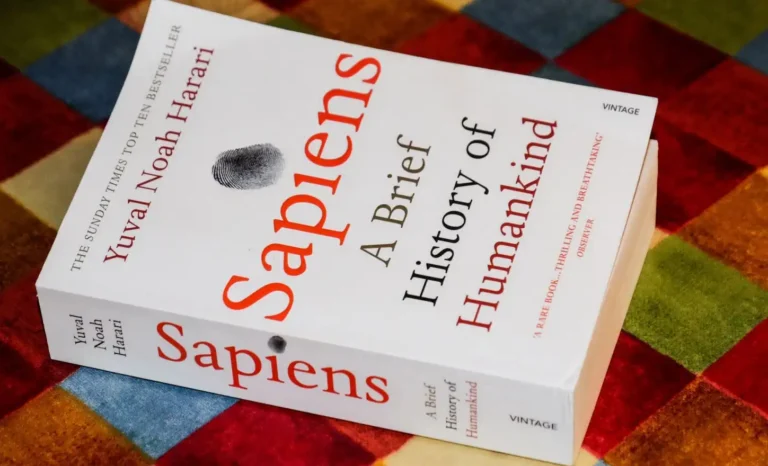
Sapiens: A Brief History of Humankind is widely considered one of the most thought-provoking and influential books of the 21st century. Written by Yuval Noah Harari, the book explores the vast journey of the human species—from the emergence of Homo sapiens in Africa to our current digital age. Through a rich narrative and accessible language, Sapiens breaks down complex topics like biology, history, economics, and philosophy into powerful insights.
A friend once shared that their history professor opened a class by saying, “If you only ever read one book about humans, make it Sapiens.” That stayed with them. Maybe you’ve also wondered why humans, out of all species, became the dominant force on Earth. Or perhaps you’ve been curious about how myths, religions, and currencies shaped entire civilizations. The book doesn’t just provide answers—it reshapes how you think about your own place in history.
From a storytelling standpoint, Sapiens feels less like reading a textbook and more like listening to an engaging, thoughtful guide who’s walking you through the grand halls of time. The keyword here, “Sapiens,” isn’t just a scientific term—it’s a mirror to who we are, who we were, and who we might become. And through these five key facts, we’ll begin that journey.
1- The Author and the Origin of Sapiens
Yuval Noah Harari, an Israeli historian and professor at the Hebrew University of Jerusalem, first published Sapiens in Hebrew in 2011. It gained wide popularity after being translated into English in 2014. Harari’s academic background in medieval history and military strategy adds unique depth to his analysis of human evolution. Interestingly, the book was adapted from a course he used to teach on world history. Its rise was helped in part by endorsements from prominent figures like Barack Obama and Bill Gates. The title “Sapiens” refers to Homo sapiens, Latin for “wise man,” the species to which all modern human beings belong. The book is now available in over 60 languages and has sold more than 20 million copies worldwide. It has been included in multiple “must-read” lists across the globe. Harari’s intention was not just to inform but to provoke deep questions about the human condition. This origin story highlights how a single academic lecture turned into a global conversation.
(Homo sapiens = wise man / modern humans)
2- The Cognitive Revolution and Why It Matters
One of the core ideas in Sapiens is the Cognitive Revolution, which Harari places around 70,000 years ago. This was when Homo sapiens began to develop advanced language and imaginative thinking. According to the book, this allowed humans to cooperate in large groups through shared myths and collective beliefs. Before this shift, humans were just another species of animal, living in small bands with limited communication. But storytelling changed everything. Harari explains that belief in concepts like gods, nations, and money—all imaginary yet powerful—allowed societies to expand and flourish. For example, the concept of human rights exists because we all agree to believe in it, not because it physically exists. This revolution laid the foundation for every major societal structure we know today. It also distinguishes humans from all other species on Earth. Understanding this turning point is essential to understanding how we came to dominate the planet.
(Cognitive Revolution = mental leap that enabled complex thinking and cooperation)
3- How Agriculture Changed Everything
Another major theme in Sapiens is the Agricultural Revolution, which began about 10,000 years ago. Harari describes it as “history’s biggest fraud.” While it allowed human populations to grow, it also led to harder labor, worse diets, and social inequality. Before farming, people lived as hunter-gatherers, which often meant more leisure time and diverse nutrition. With agriculture came private property, hierarchical societies, and organized religion. Wheat and rice may have fed millions, but they also required constant care, back-breaking work, and dependence on unpredictable seasons. Harari provocatively suggests that humans didn’t domesticate crops—crops domesticated humans. The Agricultural Revolution shifted our relationship with the Earth and laid the groundwork for cities, kingdoms, and empires. It was a double-edged sword: stability at the cost of freedom. This fact shows how human progress often comes with hidden costs.
(Agricultural Revolution = shift from foraging to farming that transformed societies)
4- The Power of Shared Myths in Human Society
In Sapiens, Harari emphasizes how shared myths (belief systems, religions, ideologies) hold civilizations together. Unlike animals that form bonds only with those they know, humans can collaborate in massive numbers—thanks to belief in common stories. These include religious texts, legal systems, corporations, and even brands. For example, a company like Apple doesn’t physically exist beyond buildings and devices; it’s a collective belief system backed by laws and trust. Harari argues that these imagined realities allow humans to trust strangers, build complex economies, and wage wars. Myth-making is not just a cultural trait—it’s a biological advantage. This insight changes how we see the world: not as fixed or “natural,” but as a web of agreed-upon ideas. The myths we share shape everything from our relationships to our laws. Understanding this concept reveals the psychological glue that holds societies together.
(Shared myths = collective beliefs that enable cooperation and identity)
5- The Enduring Impact of Sapiens
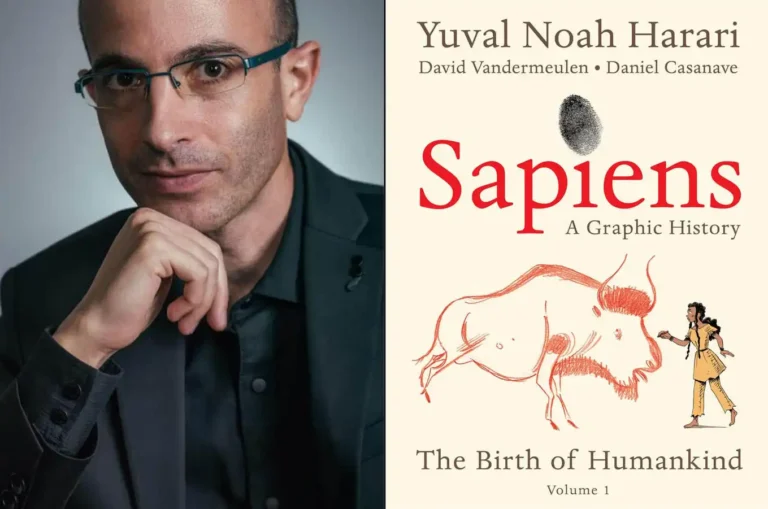
Since its publication, Sapiens has continued to spark debate and inspire readers worldwide. It’s been praised for its bold storytelling, interdisciplinary approach, and philosophical depth. However, it’s also drawn criticism from some scholars who argue that it simplifies or overstates certain theories. Despite this, the book remains a bestseller and is often used in schools and universities. Its success led Harari to write follow-ups like Homo Deus and 21 Lessons for the 21st Century. Sapiens has also been adapted into graphic novels, a young readers’ edition, and even a documentary in development. But perhaps its most lasting legacy is the way it encourages readers to question assumptions about history, progress, and humanity. The book is more than just a timeline—it’s a mirror. And in that reflection, many find both discomfort and clarity. In the end, Sapiens continues to be one of the most important and talked-about nonfiction books of our time.
6- Sapiens and the Role of Fiction in Human Cooperation
One of the most original ideas in Sapiens is that fiction—stories we collectively believe in—enables large-scale cooperation. Harari argues that this sets humans apart from all other animals. While chimpanzees can warn others of danger, they cannot invent gods or nations. Humans, on the other hand, can believe in a constitution, a religion, or the idea of justice. These fictional structures allow millions of people to organize, obey laws, and even die for a flag. Fiction, in this sense, includes legal entities like governments and corporations. Harari calls these imagined orders the “bedrock” of civilization. They’re not lies but shared beliefs we act upon daily. Understanding this gives us a new lens on what binds societies together.
(Fiction = imagined concepts humans treat as real for cooperation)
7- Capitalism and Consumerism in the Modern Age
Sapiens devotes a sharp chapter to capitalism and the rise of the modern economic system. Harari links capitalism’s power to the belief in endless growth and profit. He explains how credit, banks, and investment rely on trust in the future. Consumerism, as he shows, became a cultural force during the industrial revolution. People were taught to want more—not just to survive, but to express identity. This shift tied happiness to consumption, a trend still dominant today. Harari doesn’t attack capitalism but analyzes how it reshaped values and priorities. He suggests that capitalism has delivered prosperity but also widened inequality. The discussion invites readers to rethink how economic beliefs shape daily life.
(Capitalism = economic system based on private ownership and growth)
8- The Scientific Revolution and Human Power
The Scientific Revolution, which began around 500 years ago, is presented in Sapiens as a turning point in human history. Harari highlights how it was driven not just by discoveries, but by a new willingness to admit ignorance. Unlike earlier worldviews that claimed certainty, science advanced by asking questions and embracing doubt. This change led to immense power: medicine, technology, and industrialization. For the first time, humans could control their environment in unprecedented ways. Science also partnered with empires and capital, fueling global conquest. Harari warns that this alliance, though powerful, is not always ethical. The knowledge gained didn’t always lead to wisdom. The Scientific Revolution, then, is both a source of pride and caution.
(Scientific Revolution = era of inquiry and technological progress)
9- The Future of Homo sapiens: Genetic Engineering and AI
Toward the end of Sapiens, Harari looks to the future and the challenges ahead. He discusses how biotechnology and artificial intelligence could redefine what it means to be human. Concepts like designer babies, brain-computer interfaces, and super-intelligent machines may soon become real. Homo sapiens, he suggests, might evolve into something entirely different. This raises ethical and existential questions that current systems aren’t ready to face. Harari calls this transition the possible rise of Homo deus, or “god-man.” It could mean the end of human history as we know it. Far from being science fiction, these developments are already underway. The future, he warns, belongs to those who shape it consciously.
(Biotechnology = use of biology to develop technologies / Homo deus = god-like human)
10- Religion, Meaning, and the Human Quest for Order
Religion plays a central role in Sapiens as a tool for meaning-making. Harari explains how religions evolved to organize societies, provide moral codes, and explain the unknown. From animism to polytheism and monotheism, belief systems adapted with social complexity. He treats religion not as falsehood but as a functional narrative. These stories gave people comfort and structure in a chaotic world. Modern ideologies like nationalism and humanism, he argues, serve a similar role today. They too provide identity, purpose, and communal bonding. Harari doesn’t judge belief—he analyzes its utility in shaping civilizations. Religion, in his view, is one of humanity’s most enduring inventions.
(Monotheism = belief in one god / Humanism = ideology placing human value at the center)
مطالب مرتبط