پناهی در زمان؛ تفسیر داستان کوتاه آیزاک آسیموف – A Loint of Paw — by Isaac Asimov
گاهی یک نویسنده با چند صفحه کوتاه، قانونی از جهان واقع را در هم میریزد. آیزاک آسیموف در داستان طنزآمیز و زیرکانهٔ «A Loint of Paw» نشان میدهد که چگونه پیشرفت علم میتواند مرز عدالت و منطق را مخدوش کند.
در این روایت، زمان دیگر صرفاً گذر ساعت نیست، بلکه پناهگاهی برای گناهکار است.
با طنزی خشک و نیشدار، آسیموف پروندهای خیالی در دادگاه آینده میسازد که قاضی آن ناچار میشود دربارهٔ عدالت در بُعد چهارم حکم دهد. این داستان کوتاه، نمونهای درخشان از برخورد علم، اخلاق و قانون در دنیایی است که زمان خود قانونشکن میشود.
خلاصه، ایده و استعارهٔ داستان
مونتی استاین، مردی زیرک و شیاد، با تقلب بیش از صد هزار دلار میدزدد. او میداند که قانون تنها تا هفت سال پس از جرم میتواند او را تعقیب کند.
پس به جای فرار در مکان، به آینده سفر میکند—هفت سال و یک روز بعد. پلیس بلافاصله پس از بازگشتش او را دستگیر میکند، اما وکیلش میگوید: «جرم او دیگر مشمول مرور زمان است.»
اینجاست که دادستان و قاضی وارد جدال میشوند: آیا واقعاً استاین «هفت سال زندگی کرده» یا فقط از آن گذشته است؟
دادستان میگوید: او از مجازات روانیِ انتظارِ دستگیری گریخته و در واقع هیچ رنجی نکشیده است.
اما وکیل پاسخ میدهد: قانون از «زمان ذهنی» حرف نزده، بلکه از عدد و تاریخ حرف زده است.
وقتی گواهی تولدش را نشان میدهد، ثابت میشود که او واقعاً هفت سال مسنتر شده است—ولو فیزیولوژیک نه، ولی تقویمی بله.
قاضی پس از یک هفته تأمل، در حکمی طنزآمیز و تاریخی میگوید:
«A niche in time saves Stein.»
یعنی «پناهی در زمان، استاین را نجات میدهد.»
در عمق این طنز، آسیموف استعارهای از رابطهٔ انسان با قانون و تکنولوژی میسازد. اگر بشر بتواند از خودِ زمان بگریزد، آیا عدالت همچنان معنایی دارد؟ او نشان میدهد که قانون، زادهٔ جهانی است که در آن زمان خطی است؛ اما در جهانی که زمان قابل پرش است، عدالت به مفهومی فلسفی و مبهم بدل میشود.
این داستان در حقیقت تذکری است دربارهٔ شکنندگی نظامهای انسانی در برابر اختراعاتی که هنوز اخلاق برایشان نوشته نشده است.
? متن اصلی داستان به انگلیسی
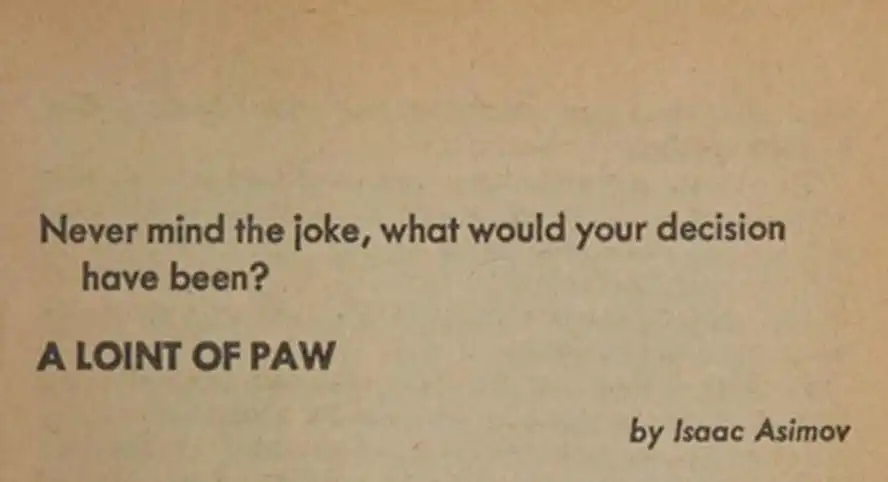
A Loint of Paw
by Isaac Asimov
There was no question that Montie Stein had, through clever fraud, stolen better than a hundred thousand dollars. There was also no question that he was apprehended one day after the statute of limitations had expired.
It was his manner of avoiding arrest during that interval that brought on the epoch-making case of the State of New York vs. Montgomery Harlow Stein, with all its consequences. It introduced law to the fourth dimension.
For, you see, after having committed the fraud and possessed himself of a hundred grand plus, Stein had calmly entered a time machine, of which he was in illegal possession, and set the controls for seven years and one day in the future.
Stein’s lawyer put it simply. Hiding in time was not fundamentally different from hiding in space. If the forces of law had not uncovered Stein in the seven-year interval, that was their hard luck.
The District Attorney pointed out that the statute of limitations was not intended to be a game between the law and the criminal. It was a merciful measure designed to save a culprit from indefinitely prolonged fear of arrest. For certain crimes, a defined period of apprehension and suspense (so to speak) was considered punishment enough. But Stein, the D.A. insisted, had not experienced any period of apprehension at all.
Stein’s lawyer remained unmoved. The law said nothing about measuring the extent of a culprit’s fear and anguish. It simply set a time limit.
The D.A. said that Stein had not lived through the limit. Defense stated that Stein was seven years older now than at the time of the crime and had therefore lived through the limit.
The D.A. challenged the statement and the defense produced Stein’s birth certificate. He was born in 2973. At the time of the crime, 3004, he was thirty-one. Now, in 3011, he was thirty-eight.
The D.A. shouted that Stein was not physiologically thirty-eight, but thirty-one.
Defense pointed out freezingly that the law, once the individual was granted to be mentally competent, recognized solely chronological age, which could be obtained only by subtracting the date of birth from the date of now.
The D.A., growing impassioned, swore that if Stein were allowed to go free half the laws on the books would be useless.
“Then change the laws,” said Defense, “to take time travel into account, but until the laws are changed let them be enforced as written.”
Judge Neville Preston took a week to consider and then handed down his decision. It was a turning point in the history of law. It is almost a pity, then, that some people suspect Judge Preston to have been swayed in his way of thinking by the irresistible impulse to phrase his decision as he did.
For that decision, in full, was:
“A niche in time saves Stein.”
❓ پرسشهای رایج (FAQ)
1. آیا آسیموف در این داستان از طنز استفاده کرده یا جدی بوده است؟
آسیموف آگاهانه از طنز حقوقی استفاده کرده تا پیچیدگی قوانین در برابر فناوریهای نو را نشان دهد. هدف او شوخی نیست، بلکه نقد فلسفی است.
2. آیا این داستان با دیگر آثار علمیتخیلی او مرتبط است؟
نه بهطور مستقیم، اما مضمون «قانون در برابر علم» در بسیاری از داستانهای او، از جمله مجموعهٔ رباتها، تکرار میشود.
3. معنی جملهٔ «A niche in time saves Stein» چیست؟
بازی با مثل انگلیسی “A stitch in time saves nine.” است و بهصورت طنز میگوید: «پناهی در زمان، استاین را نجات داد.»
4. پیام نهایی داستان چیست؟
قانون تا وقتی معنا دارد که زمان و تجربهٔ انسانی ثابت باشند. وقتی زمان شکسته شود، عدالت نیز مفهوم خود را از دست میدهد.
5. چرا این داستان هنوز خواندنی است؟
چون پرسش اصلی آن-رابطهٔ فناوری با اخلاق-در عصر هوش مصنوعی و واقعیت مجازی دوباره زنده شده است.
نوشتههای مرتبط با آسیموف
- داستان علمی تخیلی مجسمه پدر - نوشتۀ ایزاک آسیموف
- آیا «شورای علوم» ایزاک آسیموف پیشنمونهای از دولتهای تکنوکرات آینده بود؟
- ایزاک آسیموف - سال 1971- چگونه کتابخانهها میتوانند زندگی شما را به طور اساسی تغییر دهند؟
- آسیموف به روایت آسیموف: داستان فرار آسیموف از بیمارستان!
- داستان علمی تخیلی «حکم اعدام»، نوشته ایزاک آسیموف
مطالب مرتبط